Smarter Campus Utility Infrastructure Solutions For Schools and Universities
Reliable, scalable systems that keep classrooms comfortable, labs powered, and entire campuses connected.

Smarter Infrastructure for Learning Environments
Behind every successful classroom, research lab, or athletic facility is utility infrastructure that works quietly but relentlessly to keep the environment safe, comfortable, and reliable. From maintaining indoor air quality to ensuring that labs and technology centers have uninterrupted power, the systems supporting education can’t be left to chance.
At AOTCS, we design, build, automate, and maintain utility solutions that match the unique demands of schools and universities. Our approach reduces energy waste, simplifies maintenance, and ensures campuses are prepared to grow without costly overhauls. Whether it’s a single K–12 building or a multi-facility university campus, we deliver smarter infrastructure that supports learning today — and scales for tomorrow.
Why Utility Infrastructure Matters in Education
Educational facilities face unique challenges when it comes to utilities. Unlike commercial spaces, schools and universities must balance tight budgets, high occupancy levels, and constant growth — all while creating safe, comfortable spaces for students and staff.
Reliable infrastructure supports more than just daily operations:
Uptime
Power interruptions can halt research, disrupt digital learning, or cancel classes altogether.
Safety & Security
Fire systems, access control, and surveillance are essential for protecting students and faculty.
Air Quality & Comfort
HVAC systems play a critical role in student health, classroom focus, and lab safety.
Scalability
As enrollment increases and campuses expand, utilities must adapt without expensive rework.
Sustainability
Meeting green building standards and reducing energy costs helps schools protect budgets and the environment.
For both K–12 districts and universities, smarter utility infrastructure means fewer disruptions, lower operating costs, and a stronger foundation for learning and research.
What We Deliver for Schools & Campuses
Every school and university has different needs — from elementary classrooms to advanced research labs — but all require utility systems that are safe, efficient, and reliable. AOTCS provides connected solutions that simplify management while supporting long-term growth.
We design and install HVAC systems that improve indoor air quality, maintain comfort across classrooms, and meet specialized requirements for labs, auditoriums, and athletic facilities.
From everyday classroom technology to high-powered research equipment, we deliver power systems with built-in redundancy. Generators, UPS systems, and transfer switches keep critical operations running without interruption.
Facilities teams can monitor and adjust multiple buildings from a single dashboard. Automation improves energy efficiency, streamlines scheduling, and provides real-time alerts for issues before they escalate.
Fire panels, alarms, access control, and surveillance systems are tied into the utility hub, ensuring a safer environment for students and staff while simplifying oversight for administrators.
At AOTCS, we bring every system together into one coordinated infrastructure — making it easier for schools and campuses to focus on education instead of managing fragmented utilities.
Retrofits for Aging Schools & Campus Facilities
Many schools and universities still operate with outdated mechanical rooms and utility systems that were built decades ago. These systems often consume more energy, require frequent repairs, and fall short of modern safety or performance standards.
AOTCS specializes in retrofitting and modernizing existing infrastructure — upgrading what you have rather than starting from scratch.
Benefits of retrofitting educational facilities:
Improved Efficiency – Replace outdated equipment and add smart controls to reduce energy costs.
Code Compliance – Bring older systems in line with today’s safety, ventilation, and accessibility standards.
Better Air Quality – Upgrade HVAC systems to improve student health and support infection control in classrooms and labs.
Reduced Maintenance Stress –Modernized systems are easier for limited in-house facilities teams to manage.
Future Expansion Ready – Retrofits can be planned with growth in mind, allowing systems to scale as enrollment or programs expand.
With retrofits, schools and campuses can stretch their budgets further while delivering healthier, more efficient learning environments.

Construction with Minimal Disruption
The Challenge
Schools and campuses can’t pause operations for renovations. Classes, research, and student life continue year-round, meaning construction must happen safely and with minimal disruption.
The Result
Students keep learning, teachers keep teaching, and administrators gain confidence that upgrades are happening in the background — not disrupting the educational mission.
Our Approach
✓ Phased Workflows – Utility upgrades are completed in stages so classrooms and labs remain functional.
✓ Off-Hour Scheduling – Disruptive work is performed at night, on weekends, or during breaks to avoid interfering with daily schedules.
✓ Safety Protocols – We maintain strict safety standards to protect students, staff, and visitors during construction activities.
✓ Campus Coordination – Our team works closely with administrators and facilities staff to align construction with academic calendars and campus operations.
Design Phase – Planning for Growth
Educational facilities are never static — student populations increase, new programs are introduced, and campuses expand. That’s why the design phase is about more than today’s needs; it’s about building in flexibility for tomorrow.

Our design process for schools and campuses follows four key steps:
Step 1: Assess Current Loads & Future Demands
We evaluate classrooms, labs, athletic facilities, and dorms to determine both present and projected utility requirements.
Step 2: Map Safety & Comfort Standards
Air quality, lighting, and emergency systems are integrated into layouts to support student health and learning performance.
Step 3: Build for Flexibility
We design systems that can adapt — with extra capacity, modular layouts, and clear pathways for expansion.
Step 4: Align with Budgets & Standards
We coordinate designs around funding realities, sustainability goals, and compliance with education-specific building standards.
Build Phase – Campus-Ready Installations
Picture this:
A university is adding a new science building that requires specialized HVAC for labs, reliable backup power, and connections to the central campus network. If mechanical, electrical, and automation work are split between multiple contractors, timelines slip, budgets stretch, and systems often end up poorly integrated.
At AOTCS, we build differently.
Our team handles mechanical, electrical, and controls together, ensuring everything is installed as a coordinated system. That means fewer trade conflicts, fewer change orders, and a smoother handoff when the building goes live.
Why It Matters:
- Projects finish faster and with fewer surprises
- Installations are code-compliant and designed for campus standards
- Facilities teams get systems that actually work together, not just coexist
For both single schools and large universities, AOTCS builds utility infrastructure that supports learning environments without adding complexity.

Automate Phase – Smarter Campus Control
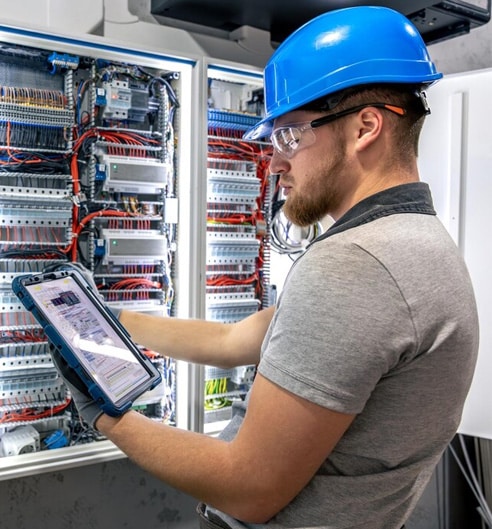
Automation takes campus infrastructure from functional to intelligent. With connected systems, facilities teams can monitor, optimize, and respond to issues across multiple buildings from a single platform — saving time, energy, and budget.
Key Features of Campus Automation:
- Centralized Dashboards
Benefit: Manage multiple buildings from one screen — no more siloed systems or manual checks. - Real-Time Alerts
Benefit: Get notified instantly about equipment faults, safety alarms, or abnormal energy use before they disrupt operations. - Remote Access
Benefit: Facilities teams can monitor and adjust systems from anywhere, reducing travel across large campuses. - Energy Optimization Tools
Benefit: Smart sequencing of HVAC, lighting, and power systems lowers utility costs and supports sustainability goals.
With AOTCS automation, schools and universities get more than just connected utilities — they gain insight, efficiency, and control across the entire campus.
Maintain Phase – Support Beyond Day One
School districts and universities often run lean facilities teams. That means maintenance usually happens reactively — fixing issues only after they cause disruptions. AOTCS provides a proactive alternative, ensuring your infrastructure keeps pace with daily demands and future growth.
Reactive Maintenance (Typical Approach):
- Wait for equipment failures before acting
- Unexpected downtime disrupts classes or research
- Higher long-term costs from emergency repairs
- Limited visibility into system health
Proactive Maintenance with AOTCS:
- Scheduled checkups and predictive monitoring
- Early alerts prevent failures before they happen
- Lower lifecycle costs through smarter upkeep
- Centralized dashboards show performance across buildings
By shifting from reactive to proactive maintenance, schools gain reliable, predictable systems that support uninterrupted learning and long-term savings.

Central Utility Hubs for Expanding Campuses
As schools and universities grow, so do their infrastructure needs. Adding new classrooms, labs, dorms, or athletic facilities often means stretching existing systems — leading to inefficiency and uneven performance.

A Central Utility Hub (CUH) solves this challenge.
By consolidating heating, cooling, power, and automation into a single, scalable hub, campuses gain efficiency today and flexibility for tomorrow.
Why campuses choose CUHs:
- Scalability
Add new buildings without costly overhauls to existing systems. - Efficiency
Shared systems reduce redundancy and energy waste across facilities. - Centralized Oversight
Facilities teams manage the entire campus from one location. - Long-Term Planning
CUHs support phased growth, making future expansion more predictable and budget-friendly.
For both K–12 districts and universities, a Central Utility Hub is the smarter foundation for campuses that never stop evolving.
Meeting Educational Standards & Sustainability Goals
Schools and universities must balance regulatory compliance with growing expectations for sustainable, cost-effective operations. At AOTCS, we design and deliver utility infrastructure that meets today’s standards while preparing facilities for tomorrow’s demands.
How we help education facilities stay ahead:
- Code Compliance: Systems are designed with NFPA, ASHRAE, and local building codes in mind, ensuring safety and readiness for inspections.
- Sustainability Targets: Our designs support LEED certification, ESG initiatives, and energy benchmarking requirements — helping campuses reduce environmental impact.
- Energy Savings: Smart controls and efficient equipment reduce utility bills, freeing up resources for student programs and academic investment.
- Future-Ready Design: We account for growth, technology upgrades, and policy changes so campuses don’t need costly overhauls later.
For both K–12 districts and large universities, meeting standards is more than checking a box — it’s about creating healthy, efficient environments where students, teachers, and researchers can thrive.

Build Smarter Educational Infrastructure
From elementary classrooms to world-class research labs, reliable infrastructure keeps education moving forward. AOTCS delivers connected utility solutions that make schools safer, campuses more efficient, and facilities easier to manage.
Whether you’re modernizing an aging K–12 building or planning a university-wide expansion, our DBAM lifecycle services — Design, Build, Automate, Maintain — ensure your systems are ready for today and built to scale for tomorrow.
Schedule a ConsultationLet’s create smarter infrastructure that supports learning at every level.
DBAM Services
Design
Build
Automate
Maintain