
Smart Utility
Systems for
Hospitals and Healthcare Facilities
Powering patient care with reliable systems designed for safety, uptime, and long-term performance.

Smarter Infrastructure for Life-Saving Environments
In a hospital, infrastructure isn’t just background support — it’s a matter of life and death. Power, air, water, and environmental control systems are the unseen backbone of patient safety and clinical performance. Whether it’s maintaining sterile environments in an operating room or ensuring emergency generators activate without fail, your utility systems need to work flawlessly, 24/7.
At AOTCS, we design, build, automate, and maintain the Central Utility Hubs that make this reliability possible. We bring mechanical, electrical, and control systems together into one coordinated infrastructure — built specifically for the high-stakes, code-driven world of healthcare.
From critical care campuses to outpatient facilities, we deliver smarter, safer utility infrastructure that supports every second of patient care.
Why Utility Infrastructure Matters in Healthcare
In a hospital, infrastructure isn’t just background support — it’s a matter of life and death. Power, air, water, and environmental control systems are the unseen backbone of patient safety and clinical performance. Whether it’s maintaining sterile environments in an operating room or ensuring emergency generators activate without fail, your utility systems need to work flawlessly, 24/7.
Utility infrastructure directly supports:
Uptime
Critical areas like operating rooms, ICUs, and labs can’t afford disruptions. Backup power and redundant systems ensure continuous operation.
Life Safety
Fire detection, alarms, and emergency egress systems must integrate seamlessly with building utilities to meet compliance and protect lives.
Infection Control
Proper HVAC design and pressure zoning reduce airborne risks, support sterile spaces, and safeguard vulnerable patients.
Scalability
As facilities expand, utility systems must adapt without compromising performance or compliance.
In healthcare, infrastructure isn’t invisible — it’s an essential safeguard that allows caregivers to focus on patients with confidence that the systems around them won’t fail.
What We Deliver for Healthcare Facilities
Healthcare facilities require more than standard mechanical and electrical systems — they need coordinated infrastructure that protects lives and meets the strictest codes. AOTCS provides end-to-end solutions that bring reliability, safety, and intelligence to every corner of your utility hub.
We design and install power systems that hospitals can depend on, including generators, ATS, and UPS configurations that keep critical areas online during outages. Redundancy is built in so that power is always available where it matters most.
From operating rooms to isolation wards, proper air management is vital for safety and compliance. Our HVAC solutions incorporate zoning, pressurization, filtration, and humidity control to maintain sterile environments and improve patient outcomes.
We integrate control systems that give your facility staff real-time visibility across power, HVAC, and safety systems. Dashboards, remote alerts, and SCADA platforms streamline oversight, helping operators respond quickly and manage compliance with confidence.
Fire panels, alarms, access control, and surveillance systems are all tied into your utility hub to create a unified, connected infrastructure. That means better coordination during emergencies and easier management for your facilities team.
At AOTCS, we don’t just build utility systems — we connect them into a smarter whole, giving hospitals the resilience and oversight needed to support patient care 24/7.
At AOTCS, we don’t just build utility systems — we connect them into a smarter whole, giving hospitals the resilience and oversight needed to support patient care 24/7.
Designed for Healthcare Compliance & Safety
Every healthcare project is shaped by strict codes and standards — and no two facilities face the exact same requirements. That’s why AOTCS approaches compliance as a partnership with your team, ensuring that every utility system we design or upgrade aligns with the regulations and protocols that apply to your specific project.
We work with your stakeholders, inspectors, and governing authorities to account for regional requirements and health department oversight. Rather than delivering one-size-fits-all systems, AOTCS tailors designs to your facility’s operational and compliance needs. Whether it’s meeting air change rates in an isolation ward, providing redundancy for an ICU power panel, or integrating fire alarm reporting into your central dashboard, we build safety and compliance into the foundation of every project.
Our role is to make sure your infrastructure supports both regulatory confidence and patient safety from day one.
Let’s talk about how AOTCS can helpRetrofits for Aging Infrastructure
Many hospitals and healthcare facilities rely on mechanical rooms and utility systems that were built decades ago. While these systems may still function, they often operate inefficiently, struggle to meet modern code requirements, and create unnecessary risks for downtime or safety issues.
AOTCS specializes in transforming outdated infrastructure into modern, connected Central Utility Hubs. Our retrofit approach allows you to:
Upgrade without full replacement – Extend the life of existing systems by modernizing critical components.
Improve efficiency – Reduce energy waste through better equipment sequencing, load balancing, and automation.
Strengthen compliance – Bring older systems up to current safety, air quality, and redundancy standards.
Enable smarter monitoring – Integrate sensors, SCADA, and dashboards into legacy systems for real-time visibility.
Whether it’s reworking a 1980s-era mechanical room, consolidating multiple small utility spaces, or upgrading controls to meet today’s healthcare expectations, AOTCS helps you move forward without the cost and disruption of a complete rebuild.

Low-Disruption Construction in Active Facilities
The Challenge
Hospitals can’t close for renovations. Utility upgrades have to happen while surgeries, treatments, and emergency care continue — making safety and minimal disruption the top priority.
The Result
Infrastructure upgrades happen smoothly in the background, while doctors, nurses, and patients experience business as usual.
Our Approach
✓ Phased Workflows – Systems are upgraded in stages so essential services remain online.
✓ Infection Control Measures – Dust, air pressure, and containment are managed to protect patients and staff.
✓ Strategic Scheduling – Disruptive work is performed after-hours or during low-traffic times.
✓ Facility Team Partnership – We coordinate closely with your staff so construction never interferes with clinical operations.
Design Phase – Planning for Civic Growth
Communities grow, services expand, and public expectations rise. That’s why the design phase for municipal and government infrastructure must account for more than just current needs — it must prepare for the future.

Our design process for civic facilities follows four key steps:
Step 1: Assess Critical Loads
We evaluate power, HVAC, and water demands for surgical suites, ICUs, labs, and other critical areas where uptime is non-negotiable.
Step 2: Map Safety & Infection Control Needs
Air pressure zones, filtration standards, fire protection, and emergency egress are built into layouts from day one.
Step 3: Build in Redundancy & Flexibility
Every design includes backup capacity and space for future expansion, ensuring the facility can adapt without major rework.
Step 4: Align with Compliance & Accreditation
We work with your project team to account for NFPA, ASHRAE, Joint Commission, and local requirements so your system is audit-ready from the start.
Build Phase – Code-Ready, Coordination-Driven
Picture this:
A hospital is expanding its surgical wing, and new backup power and HVAC systems need to be installed. In most projects, multiple contractors overlap — mechanical here, electrical there, automation left for later. The result? Delays, finger-pointing, and systems that don’t fully integrate.
At AOTCS, we build differently.
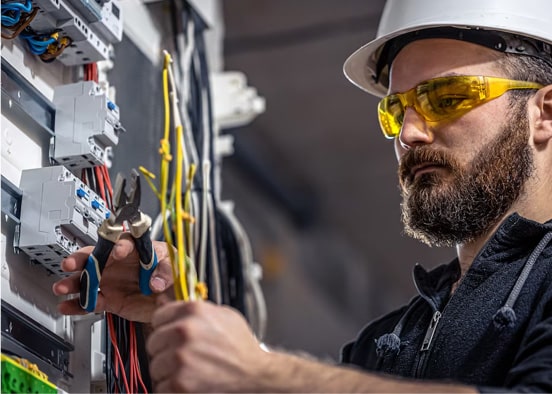
Our team brings mechanical, electrical, and controls expertise under one roof, so your infrastructure is installed as one connected system. Every pipe, panel, and cable run is placed with safety, serviceability, and compliance in mind.
Why It Matters:
- Faster project timelines with fewer trade conflicts
- Installations built to healthcare codes and standards from the start
- Smoother commissioning and easier transitions to Day 2 operations
When your hospital depends on reliable systems, construction can’t leave room for guesswork. That’s why AOTCS builds with precision, accountability, and long-term performance in mind.

Automate Phase – Real-Time Visibility and Alerts
Automation is what transforms infrastructure from functional to intelligent. In healthcare environments, that means your systems don’t just run — they communicate, adapt, and alert your team before problems become crises.
Key Features of Municipal Automation:
- Centralized Dashboards
Benefit: Facilities teams see HVAC, power, and life safety systems in one view — no more chasing data across multiple platforms. - Real-Time Alerts & Notifications
Benefit: Early warnings for equipment issues or abnormal conditions help staff respond before patient care is impacted. - Remote Access
Benefit: Engineers and facility managers can monitor and adjust systems from anywhere, reducing response times and staff workload. - Smart Sequencing & Controls
Benefit: Equipment like boilers, chillers, and generators operate more efficiently, saving energy and ensuring redundancy when it matters most.
Automation brings peace of mind in critical environments, giving your hospital the confidence that essential utilities are not just running — but optimized, connected, and safeguarded around the clock.
Maintain Phase – Stay Ahead of Downtime
Hospitals can’t afford to wait until systems fail. Yet many facilities still rely on a reactive approach to utility maintenance — fixing issues after they’ve already caused disruptions. AOTCS takes a proactive approach, keeping your systems ahead of downtime.
Reactive Maintenance (Typical Approach):
- Wait for equipment failures before acting
- Unplanned downtime impacts patient care
- Higher repair and replacement costs
- Limited visibility into system health
Proactive Maintenance with AOTCS:
- Continuous monitoring of key equipment
- Predictive alerts before failures occur
- Scheduled service that reduces disruptions
- Optimized performance and extended equipment life
By shifting from reactive to proactive maintenance, hospitals gain more than just peace of mind — they gain predictable operations, cost savings, and infrastructure that supports patient safety every hour of every day.

Start Planning Smarter Healthcare Infrastructure
Protect patients. Keep systems online. Build for the future.
At AOTCS, we deliver connected utility solutions designed for the unique demands of hospitals and healthcare facilities — where uptime, compliance, and safety can never be compromised. Whether you’re planning a new facility, expanding your campus, or modernizing aging infrastructure, our DBAM lifecycle services ensure your systems perform when it matters most.
Schedule a ConsultationDBAM Services
Design
Build
Automate
Maintain